
Introduction
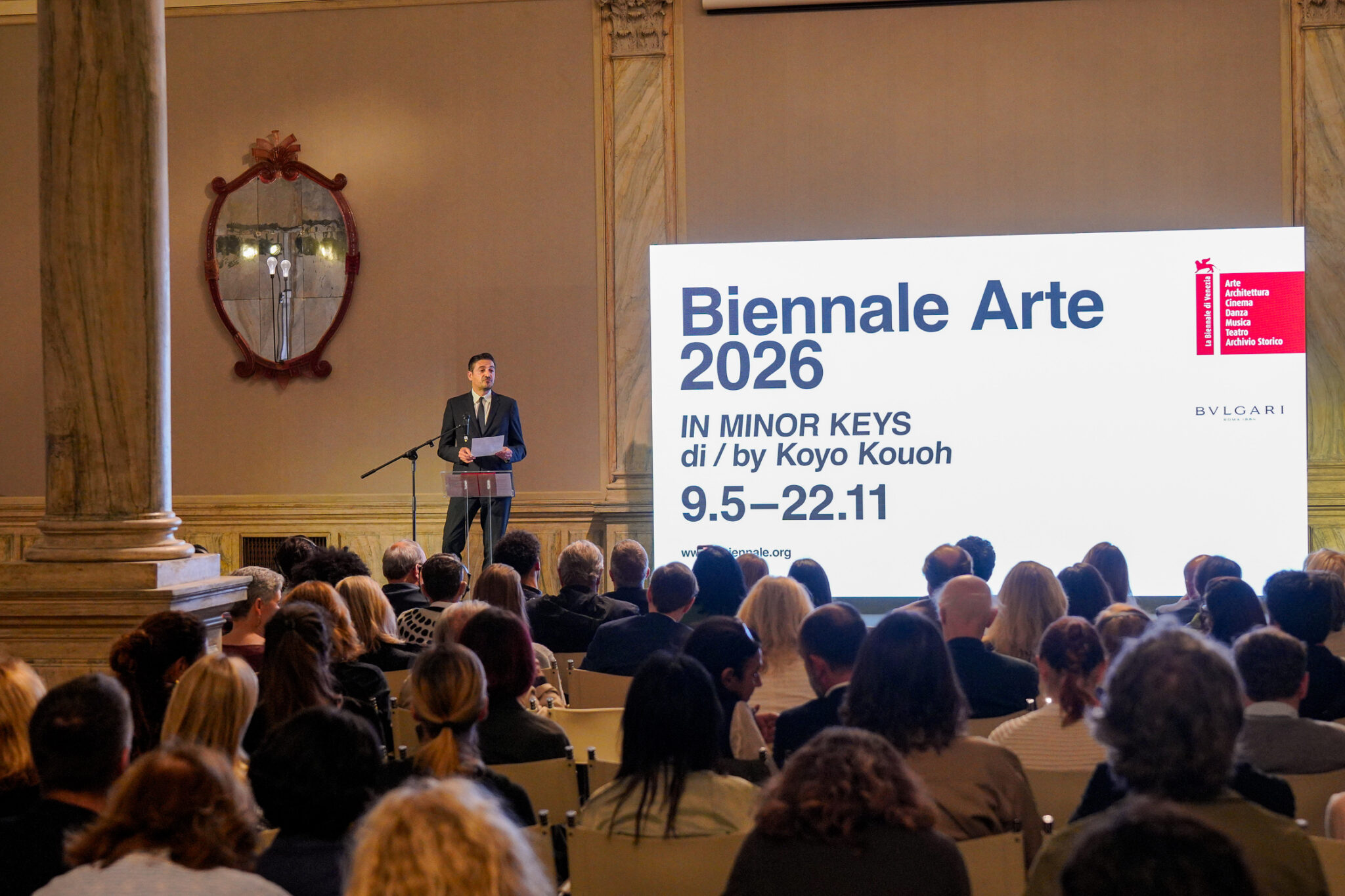
The 61st Esposizione Internazionale d’Arte – La Biennale di Venezia, taking place from 9 May to 22 November 2026, will once again transform Venice into the beating heart of the global art world. The theme, In Minor Keys, promises a quieter, more introspective tone than in previous years — a celebration of subtlety over spectacle, of reflection over noise.
As The Financial Times observed when announcing the curatorial direction, this edition “invites us to listen carefully — to the whispers between histories, cultures and identities.” The Biennale, more than an exhibition, is a state of mind — a place where art and thought converge.
What the Biennale Is
Founded in 1895, the Venice Biennale is one of the most influential and enduring cultural events in the world. Every two years, it gathers artists, curators, and thinkers across continents to present new forms of expression through national pavilions, collateral events, and the main curated exhibition hosted across the Giardini, Arsenale, and multiple Venetian palazzi.
According to Artsy, the Biennale has become “a snapshot of where global art is heading — sometimes confused, often dazzling, but always vital.”
But it is more than a display of art; it is a dialogue — between nations, between artistic traditions, between the old and the new.
The Allure of the Biennale
Why does the Biennale captivate so many, year after year?
Partly, it’s Venice itself — a city that seems to float between dream and decay, modernity and history. John Ruskin once wrote, “Venice… a splendour of miscellaneous spirits,” and the Biennale amplifies this sense of multiplicity.
Each edition brings together thousands of works, hundreds of artists, and countless conversations. Visitors wander through historic gardens and industrial docks, discovering pieces that challenge perception or stir emotion. As The New Yorker noted in a review of a past edition, “the Biennale thrives on the human desire to see everything — to witness art at the scale of the world.”
However, fascination can blur into fatigue. The Biennale’s magnitude can overwhelm. The assumption that “bigger means better” is often false. Great art sometimes whispers rather than shouts — and the 2026 theme seems designed to remind us of that.
What “In Minor Keys” Means
The chosen theme, In Minor Keys, curated by the late Koyo Kouoh and her team, signals a shift toward more intimate, emotionally resonant art. It suggests sensitivity, rhythm, lament — the tonalities of human experience that major narratives often overlook.
In musical terms, a “minor key” carries melancholy or complexity; in artistic terms, it can evoke nuance, tenderness, or resilience. Expect works that address fragility, memory, migration, and belonging — art that insists on attention rather than spectacle.
As Flash Art wrote, “Venice remains a mirror of our world, and the Biennale its chorus — but this time, it sings softly.”
Why the Biennale Still Matters
Despite — or perhaps because of — its contradictions, the Biennale remains vital. It is at once a festival and a forum, a marketplace and a meditation, a cultural mirror and a provocation.
For artists, it offers global visibility and validation.
For audiences, it provides immersion — a chance to see and feel the pulse of our times.
And for Venice, it renews a centuries-long tradition of cosmopolitan dialogue.
But we must also recognize the tensions beneath its surface: the politics of representation, the environmental burden of tourism, the spectacle of global art capitalism. Understanding the Biennale means questioning it — asking who gets to speak, and who remains unheard.
Looking Ahead to 2026
The 2026 Biennale invites us to rediscover attention. Its very title is an act of resistance to noise — a call for art that heals, observes, and remembers.
Visitors can expect to see:
- National pavilions re-examining identity through quieter, more personal lenses.
- Installations and performances that dwell on sound, time, and absence.
- Dialogues between artists and communities addressing overlooked narratives.
In a world accustomed to shouting, the Biennale’s minor tones may become the year’s most powerful statement.
Conclusion
The Venice Biennale 2026 will not merely be another art show; it will be an act of listening — to the past, to the fragile present, and to the small yet profound voices that shape our world.
And as every edition reminds us, the Biennale is not just about art — it’s about humanity’s search for meaning, expressed through beauty and contradiction.
At Deep Blue Venice, we hope once again to contribute to this extraordinary event — working alongside international collaborators from all over the world to support the organization and spirit of a Biennale that continues to inspire us all.
