
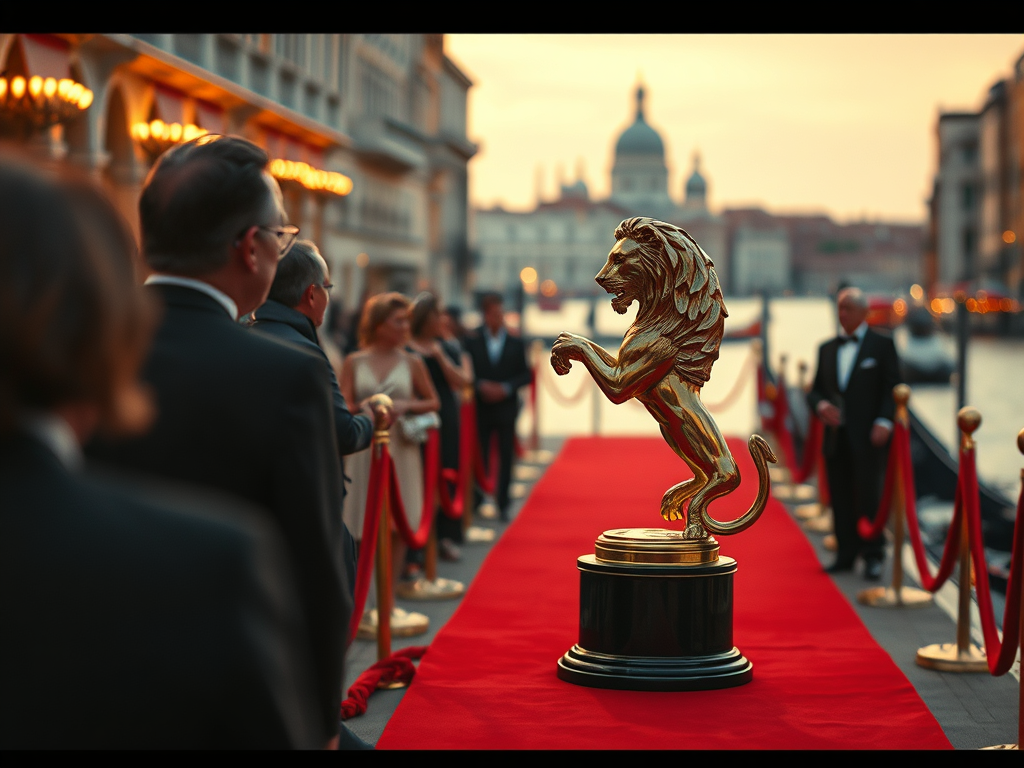
Roots in 1932: Cinema Meets Splendor on the Lido
The Venice International Film Festival—the oldest of its kind in the world—was born in 1932 as part of the larger Biennale of Venice, originally conceived by Count Giuseppe Volpi di Misurata, Antonio Maraini, and Luciano De Feo. Its inaugural screenings took place on the terrace of the Hotel Excelsior on the Lido, without any competition. Films such as Dr. Jekyll and Mr. Hyde, Grand Hotel, and Frankenstein were among the first to light up the screen. The event was an immediate success, drawing celebrities like Greta Garbo and Clark Gable to the lagoon’s glamorous shores (Wikipedia, italiani.it, ITALY Magazine).
By 1934, the festival introduced its first awards—known as the Coppa Mussolini—for best foreign and Italian films, later replaced by the iconic Golden Lion in 1949, which remains a coveted prize to this day (Encyclopedia Britannica, Wikipedia).
War, Rebirth, and Political Upheavals
World War II disrupted the festival. Editions from 1940 to 1942, when renamed the Italo-German Cinematic Festival, are now regarded as marginalized due to fascist propaganda influence (Wikipedia, Le Monde.fr). After the war, the festival was reborn with renewed vigor. In 1947, it was held in the Doge’s Palace courtyard, attracting a record 90,000 attendees—a powerful comeback for cinema’s oldest showcase (Wikipedia).
The late 1960s brought social turbulence to the event. Student protests and political unrest led to the suspension of formal awards from 1969 to 1979—a hiatus in the festival’s prestige. The Golden Lion was restored in 1980 (Encyclopedia Britannica, Wikipedia).
Iconic Highlights & Scandals
Over the decades, Venice became synonymous with cinema’s most memorable moments:
- 1934: Ecstasy, featuring Hedy Lamarr’s controversial nude scene, caused a sensational uproar. The actress later claimed her iconic expression was actually discomfort from being pricked with a pin by the director (CineFacts, Europass).
- 1954: Federico Fellini’s La Strada stirred divided reactions yet earned the Silver Lion and enduring acclaim (Italia Informa).
- 1989: Ragazzi Fuori by Marco Risi received a 20-minute standing ovation, emblematic of a resurgence in Italian cinema (Italia Informa).
- 2013: For the first time, a documentary—Gianfranco Rosi’s Sacro GRA—won the Golden Lion, breaking tradition yet marking a milestone (Italia Informa).
- Dramatic moments include: Lars von Trier’s virtual appearance after his Cannes ban (2014), Lady Gaga’s emotional Venice debut amid a storm (2018), controversies surrounding Roman Polanski’s films (2019), a pandemic-era festival (2020), and the Olivia Wilde–“Don’t Worry Darling” scandal swirling around rumors involving Harry Styles (2022) (Vogue).
Modern Rivalries & Hollywood’s Return
In recent years, Venice has emerged as a powerful rival to Cannes, particularly by embracing streaming platforms like Netflix to attract top-tier films and diversify its cinematic voice (Le Monde.fr).
Hollywood’s stars have returned in force post-strikes with marquee names like George Clooney, Angelina Jolie, Nicole Kidman, and Brad Pitt expected at recent editions, signaling Venice’s enduring allure (The Guardian).
George Clooney’s connection with the festival traces back to 1998’s Out of Sight. He’s returned with such films as Gravity and Michael Clayton, and even celebrated personal moments—like becoming a father—on the Lido red carpet (AP News).
Venice: The Ultimate Film Stage
From its glamorous beginnings to a beacon of cinematic renewal, the Venice Film Festival continues to blend history, controversy, and star power. It remains not only a global stage for premieres and auteur cinema but also an enduring celebration of Venice itself—a living symbol of art, culture, and innovation.
